

Why Energy-Efficient Air Conditioning Is No Longer Optional for Commercial Buildings?
There was a time when choosing an air conditioning system for a commercial building came down to one simple question: Does it keep things cool enough? That time is well and truly over.
Between rising energy bills, tightening regulations, and growing pressure from tenants and customers, energy-efficient air conditioning has shifted from “nice to have” to “non-negotiable.” If you manage a commercial property, whether that’s an office block, a warehouse, or a retail unit, the system that keeps your building comfortable is now one of the biggest factors in your operating costs and environmental footprint.
The good news? Modern commercial air conditioning technology has come a long way. Today’s systems don’t just cool a building. They can heat it, recover wasted energy, and reduce running costs. But with so many options available, knowing where to start can feel overwhelming.
The Cost of Getting It Wrong
Energy is one of the largest overheads for any commercial building. The Carbon Trust’s heating, ventilation and air conditioning guide explains why HVAC can account for a substantial share of an organisation’s energy spending. If your system is outdated or poorly matched to the space, you’re effectively burning money.
And it’s not just about the electricity bill. In England and Wales, privately rented non-domestic properties covered by the minimum energy efficiency standards (MEES) generally need an EPC rating of E or above, unless a valid exemption applies. Since 1 April 2023, the rules also apply to continuing existing lettings. The government has consulted on a trajectory towards EPC B by 2030; a proposal should not be treated as an enacted deadline. Check current guidance for your property before making compliance decisions.
Put simply, an inefficient air conditioning system can increase running costs and affect the building’s overall energy performance. A suitable upgrade should be considered alongside insulation, lighting, controls and the rest of the building’s services.
What Makes a System “Energy Efficient”?
When we talk about energy-efficient cooling systems, we mean systems that deliver the same level of comfort using less power. Several technologies make this possible.
Heat Pumps: The Standout Technology
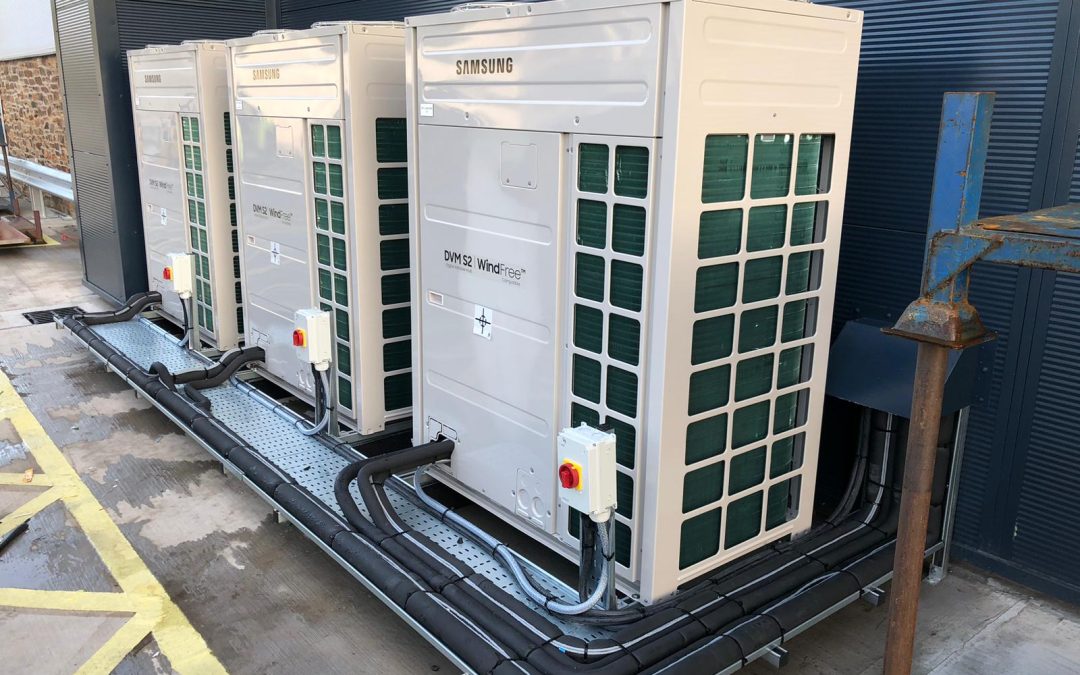
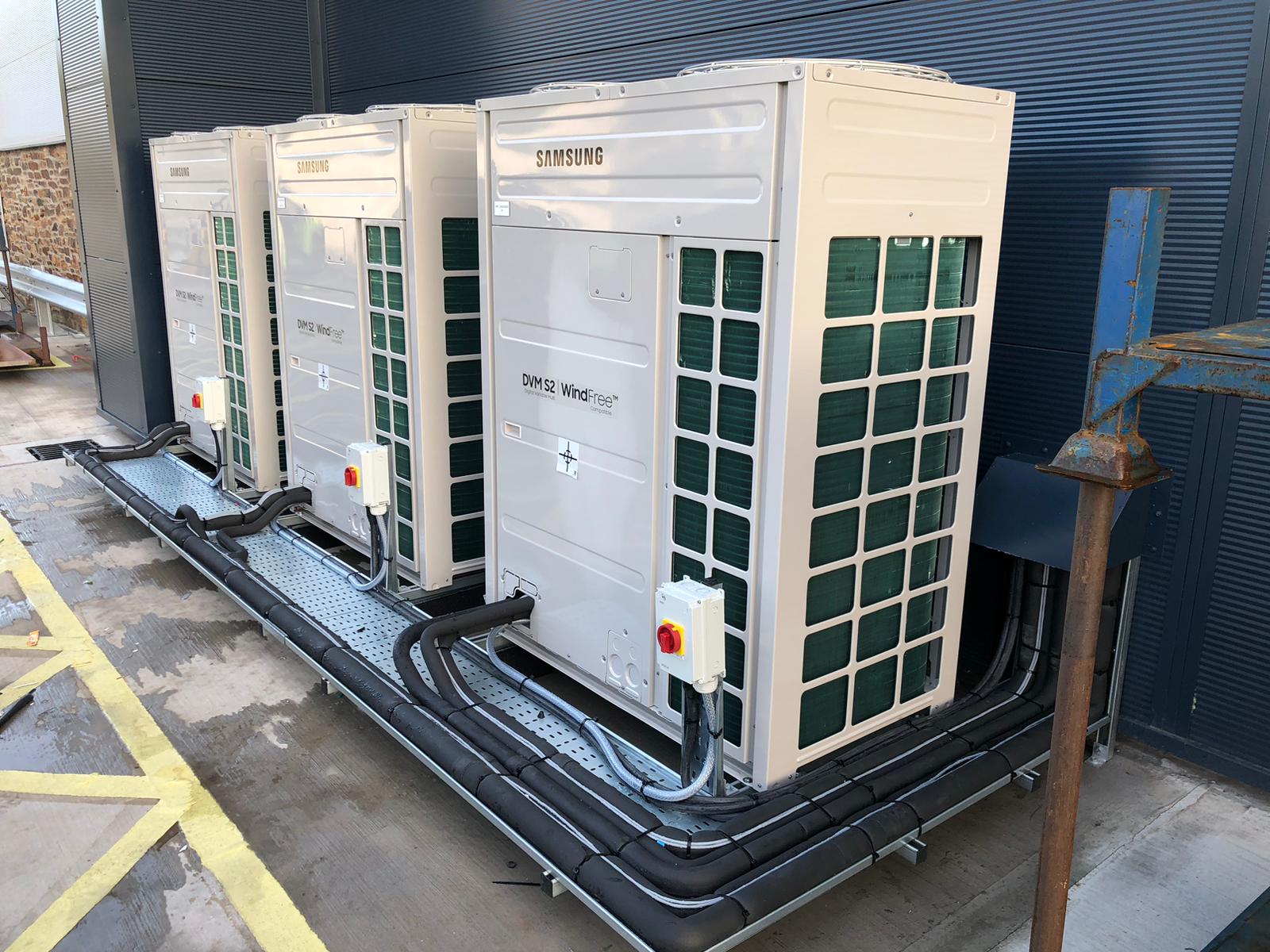
Heat pump air conditioning has become a popular technology for commercial properties. Heat pumps move existing heat from one place to another. In summer, they pull heat out of your building. In winter, reversible systems draw warmth in from outside air.
Performance varies with the equipment, operating temperatures and installation. Compare seasonal efficiency ratings and expected running costs for your building, rather than assuming a fixed efficiency figure. Gradwood’s industrial heating and heat pump solutions can be assessed alongside your cooling requirements.
Heat Recovery Technology
Heat recovery technology takes efficiency further. In buildings with multiple zones, some areas might need cooling while others need heating. Heat recovery systems capture the energy being removed from cooled areas and redirect it to warm other parts of the building. This can reduce wasted energy when the building’s heating and cooling demands are well matched.
Air Handling Units
Air handling units manage ventilation and air quality, as well as temperature control. Modern units incorporate energy recovery, filtration, and precise airflow management, making them a core part of any serious building services HVAC setup. They’re particularly valuable in larger commercial spaces where fresh air requirements are high. Explore our commercial and industrial ventilation systems to understand how fresh-air supply and extraction can work together.
Evaporative Cooling
Evaporative cooling systems use the natural process of water evaporation to cool air. They can be effective in suitable, well-ventilated industrial or warehouse environments and use less electricity than refrigerant-based alternatives in the right conditions. They won’t suit every building: humidity, outside conditions and ventilation need to be considered.
Matching the Right System to Your Building
There’s no single “best” system for every building. The right choice depends on your space, your usage patterns, and your goals.
Energy-efficient air conditioning for offices typically means a system that provides year-round climate control without the noise and energy waste of older units. Multi-split air conditioning for commercial use is a popular choice here, allowing individual rooms or zones to be controlled independently so you’re not heating empty meeting rooms at full blast.
Air conditioning solutions for retail spaces need to handle high footfall, frequent door openings, and fluctuating occupancy. Systems with variable speed compressors adjust output in real time, matching the cooling load rather than running flat out regardless.
For warehouses and industrial spaces, commercial heating and cooling solutions, such as heat pumps combined with air handling units, can deliver effective climate control. Evaporative cooling can also play a role, particularly in spaces with good natural ventilation. A free, no-obligation site survey helps establish which approach suits your building.
How to Reduce Air Conditioning Costs in Commercial Buildings
Upgrading your system can be an impactful step, but it’s not the only one. Here are practical ways to start reducing energy costs in buildings straight away.
- Schedule your system properly. Too many commercial buildings run their air conditioning outside occupied hours. Programmable controls and building management systems can help cut this waste.
- Maintain your equipment. Dirty filters, low refrigerant levels, and worn components force systems to work harder. Regular HVAC servicing and planned maintenance help maintain efficiency and extend equipment life.
- Zone your building. Heating or cooling an entire floor when only half is occupied is a common and expensive mistake. Zoning lets you target comfort where it’s actually needed.
- Consider the building envelope. Even the best air conditioning system for commercial buildings will struggle if heat pours in through poor glazing or escapes through uninsulated walls. Addressing the building fabric alongside your commercial HVAC systems delivers the best results.
The UK Landscape Is Shifting Fast
The push toward energy efficiency isn’t slowing down. When comparing equipment, the government-backed Energy Technology List is a useful source of information on energy-efficient products.
Financial support depends on the property, installation and current scheme rules. Check the Boiler Upgrade Scheme eligibility guidance with a suitably qualified installer; do not assume that a commercial air conditioning installation qualifies. The former Enhanced Capital Allowance scheme for energy- and water-efficient plant and machinery ended in April 2020. Ask your accountant about any current tax relief applicable to your investment.
Planning an upgrade gives you time to assess the building, compare specifications and schedule installation around operations. Review the latest requirements rather than relying on proposed future EPC targets when setting your timetable.
Finding the Right Partner
Choosing a system is one thing. Getting it designed, specified, and installed correctly is another. A poorly installed system, no matter how efficient on paper, will underperform and cost you more in the long run.
Air conditioning installation for businesses in the UK should always start with a proper site survey and an honest conversation about what you actually need, not a hard sell on the most expensive kit. Focus on providers with experience in buildings like yours. Ask for case studies, check reviews, and don’t be afraid to ask questions. A good partner will welcome them.
Ready to Make the Switch?
Whether you’re looking to upgrade an ageing system, fit out a new building, or simply work out how to reduce air conditioning costs in commercial buildings, Gradwood can help. We specialise in quality systems and solutions for all your industrial needs, making the process straightforward from first conversation through to installation and aftercare.
Get in touch with Gradwood today to discuss your requirements and find the right energy-efficient solution for your building.

Our Services
Heating, air conditioning, ventilation, and smoke ventilation servicing and maintenance, all delivered by experienced engineers who understand your industry requirements.

Cut Your Energy Costs
Energy-efficient systems that reduce energy use, meet regulations, and lower operational costs year after year without compromising performance or reliability.

Installation Done Right
End-to-end installation by our in-house engineers, ensuring no shortcuts, no subcontractors, and systems that perform exactly as designed every time.

Support That Doesn’t Stop
Ongoing maintenance, emergency support, and expert advice whenever needed, ensuring long-term performance and reliable service well beyond installation day.